Re-engineering Medical Study Systems for Active Recall
Role
Product Designer
Type
0-to-1 Web Application & Design System
Scope
Card UI Layouts
Information Architecture
Product Strategy
Component Library
Problem
Ophthalmology students and residents face an overwhelming volume of highly complex clinical data, microscopic imagery, and surgical procedures. Existing study tools are either outdated desktop databases or unstructured flashcard apps that fail to handle dense medical hierarchy, causing severe cognitive fatigue during critical exam preparation.
Result
Designed and launched a high-performance mobile study companion that streamlined complex ophthalmic clinical guides into high-density, scannable visual decks. The intuitive interface reduced review times, optimized active recall cycles, and maintained absolute visual precision across complex microscopic imagery.
Solution
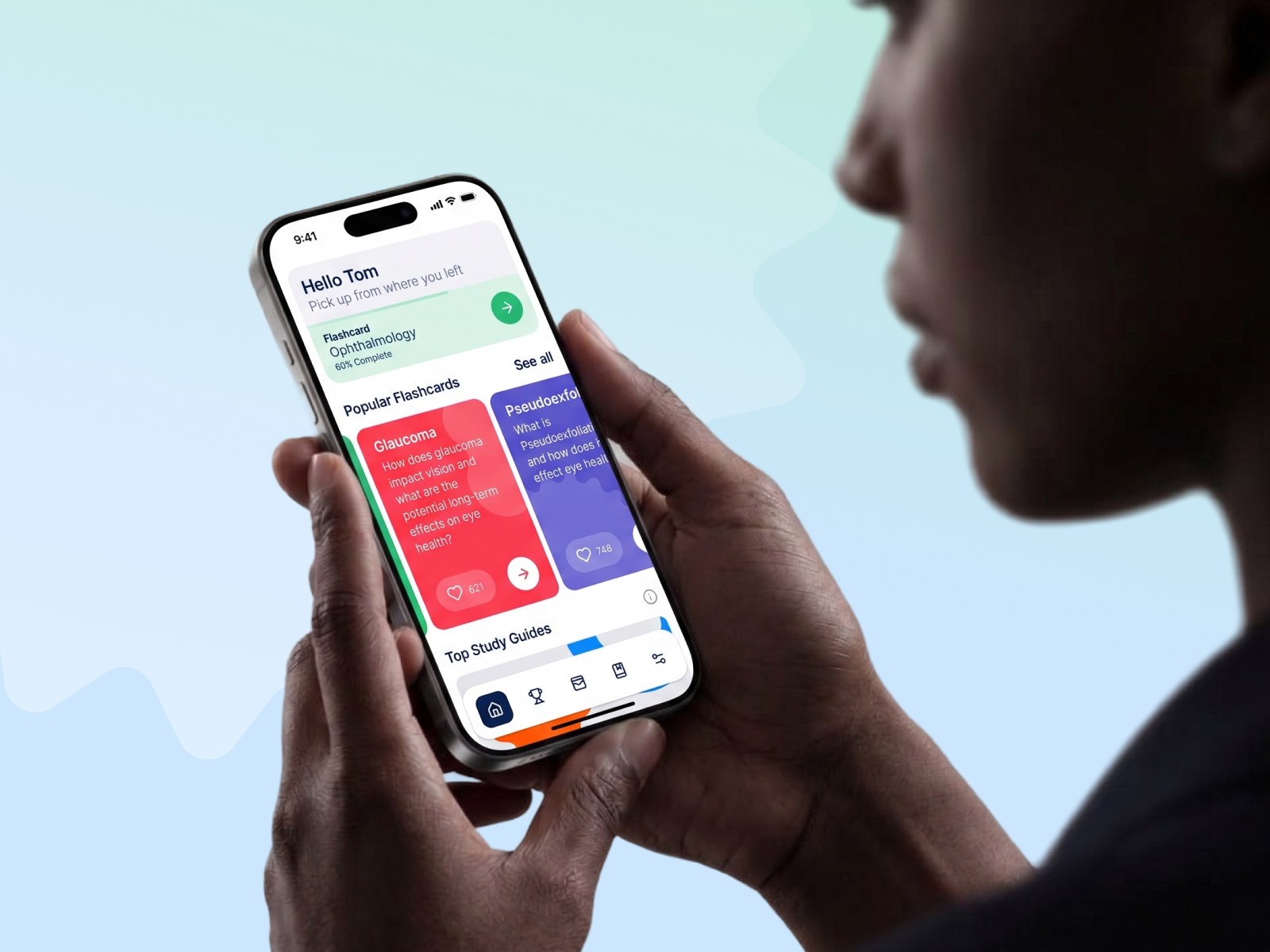
A mobile-first visual study engine anchored on a strict component-driven card system. By combining high-density metadata filters with precise typographic hierarchies, the app allows medical professionals to rapidly categorize, search, and digest intricate clinical cards, integrating interactive active-recall states into a highly polished, mobile experience.
The Challenge of Ultra-Dense Visual Learning
Ophthalmology is an incredibly visual and highly specialized branch of medicine, demanding absolute precision in diagnosing microscopic structural changes in the eye. For residents and students, standard learning tools fail to organize this specialized material into digestible mobile experiences. As the founding Lead Product Designer for OphthoCards, my objective was to take an expansive library of clinical guides, diagrams, and pathology classifications and translate them into an agile, highly intuitive mobile study platform. The goal was to build a structured, high-density flashcard ecosystem that maximizes retention without causing visual overwhelm.
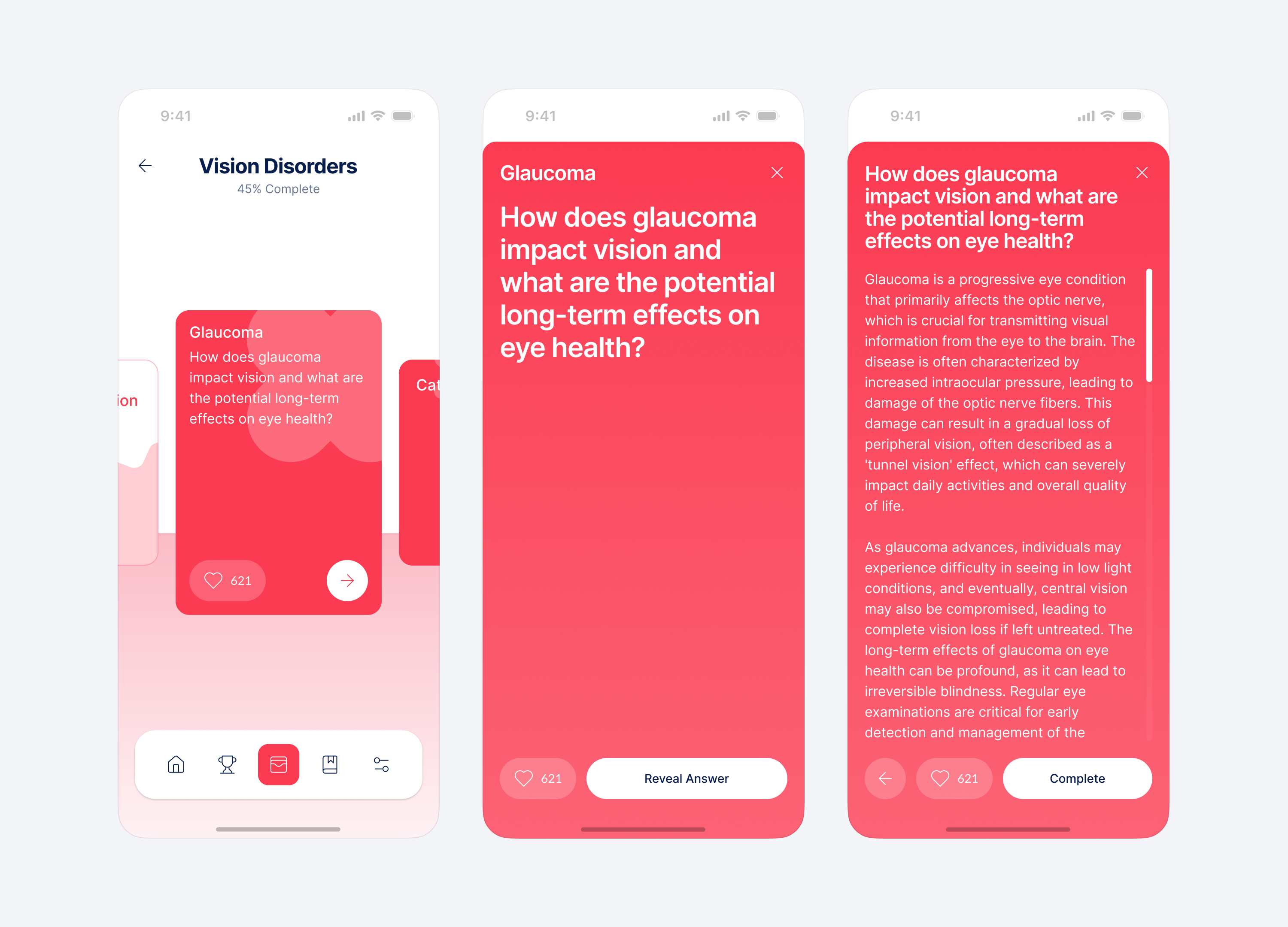
Designing a Medical Card Anatomy
Medical professionals require rapid, clinical-level precision. Unlike standard language-learning flashcard apps, an ophthalmology study card must accommodate a dense payload: disease classification hierarchies, diagnostic criteria, and custom note fields.



Redefining Medical EdTech
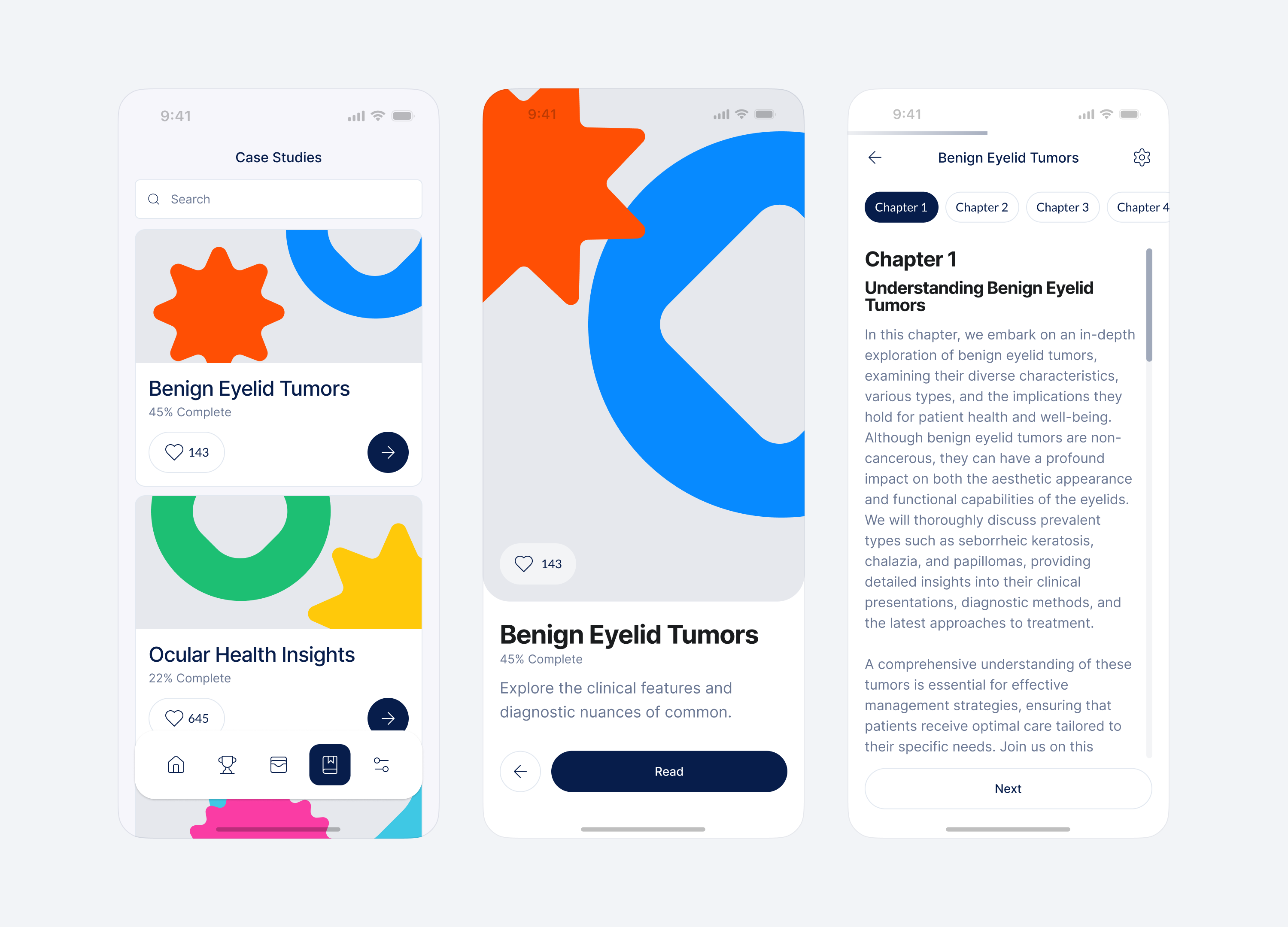
By substituting dense, unstructured medical databases with a highly visual, gesture-driven card architecture, OphthoCards transformed how residents and students master complex ophthalmic clinical knowledge. The custom-built study engine and intuitive image-inspection tools eliminated visual fatigue, making long study sessions highly productive. The resulting design system allowed the application to be developed and shipped with total visual consistency, delivering a premium, reliable, and high-performance learning companion to the medical community.